

If It’s on Paper, It’s Already Late.
How to Eliminate Your Paper-Based Bottlenecks.
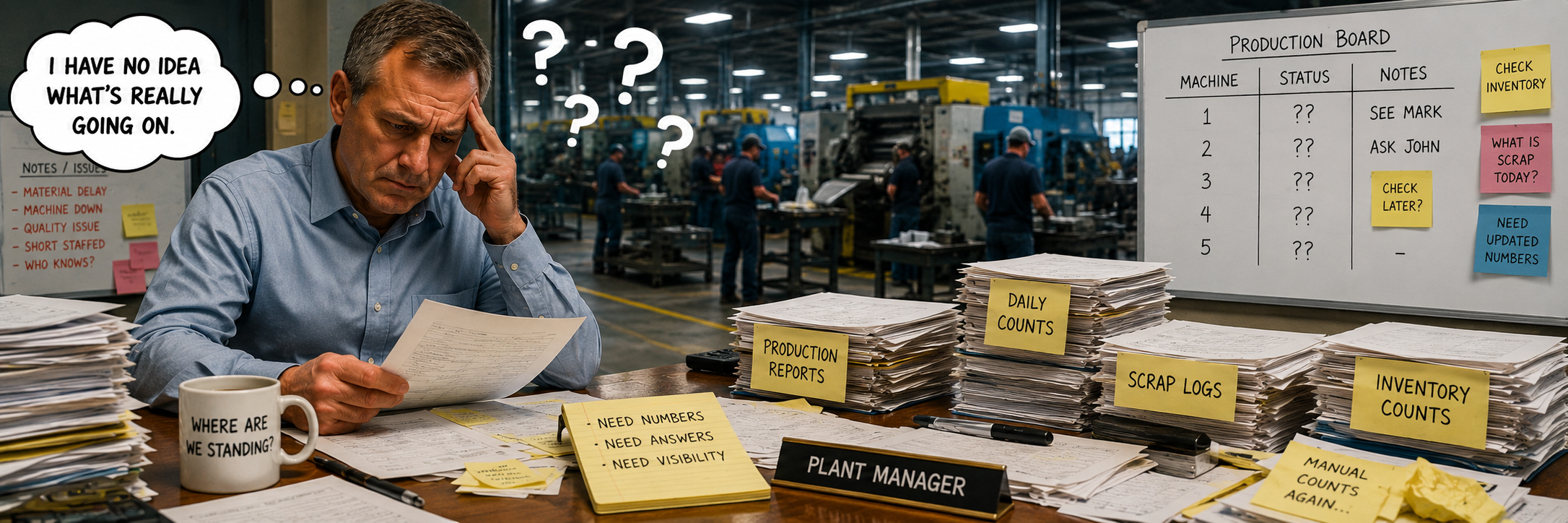
Walk through almost any manufacturing facility and you’ll still find paper everywhere.
Production schedules taped to walls. Work instructions clipped to machines. Quality forms stacked on desks. Production logs sitting in binders waiting to be entered into a spreadsheet.
For years, paper has been the default way to manage production. But in today’s competitive manufacturing environment, paper is no longer just inconvenient—it’s expensive.
Lost paperwork, outdated instructions, delayed reporting, and manual data entry create hidden costs that impact production, quality, and profitability every day.
Every one of these issues creates delays between what is happening on the production floor and what management knows is happening. And when visibility is delayed, decision-making is delayed.
The Hidden Costs of Paper-Based Manufacturing
Most manufacturers understand that paper creates inefficiencies, but few realize how much they cost the business every day.
Paper may tell you what happened. It rarely tells you why it happened. When visibility is delayed, decision-making is delayed. Paper-based processes create challenges across the entire plant:
- Production records get lost or misplaced and operators forget to complete forms.
- Change orders and work instructions can be delayed or missed.
- Data sits on clipboards instead of being available in real time.
- Scrap and inventory information is often inaccurate or unavailable until too late.
- Labor productivity and machine performance are difficult to measure accurately.
- Information must be manually re-entered into spreadsheets or ERP systems.
- Without real-time visibility, customer service becomes reactive rather than proactive.
Why Machine/Labor/Arm Scheduling Becomes More Difficult with Paper
Scheduling is one of the areas most impacted by paper-based operations. Schedulers depend on accurate, timely information to make decisions. Unfortunately, paper systems don’t provide either. Schedulers are forced to make decisions using outdated information received hours or days later. The scheduler or customer service / sales manager has no idea about:
- Which jobs are completed?
- Which machines are running behind schedule?
- Where production bottlenecks are occurring?
- Scrap and cost over-runs (that affect margins)?
- What orders are at risk?
If You Have to Walk the Floor to Find Out What’s Happening, You’re Already Behind
Paper slows both operations and management. Critical production information lives on clipboards, whiteboards, and handwritten logs scattered throughout the facility. Managers spend valuable time collecting information manually and piecing together data from multiple sources just to understand the current state of production.
Manual info gathering prevents leaders from focusing on improving production because they are busy trying to discover what happened in the first place, and problems have already occurred. Info is not up-to-the-minute. Managers still have questions (especially the next day):
- How many parts were completed?
- How much inventory is available?
- Which customer jobs are at risk?
- Where is scrap increasing? How recently?
- Which operators are meeting productivity goals?
Whiteboards, Sticky Notes Are Not Production Systems
Many manufacturers use sticky notes, and manually-updated whiteboards. These can become a source of inconsistency. Also, time must still be spent entering and updating the information into other systems. These have the same problems as paper:
- Whiteboards rely on someone remembering to update them.
- Post-it notes get moved, removed, or forgotten. Boards get erased or outdated.
- Manually collect and review the paperwork.
- Enter the data and upload information into ERP systems and generate report.
RotoEdge Pro: Built to Replace Paper
RotoEdge Pro was designed specifically for growing rotational molding operations that want a better way to manage production.
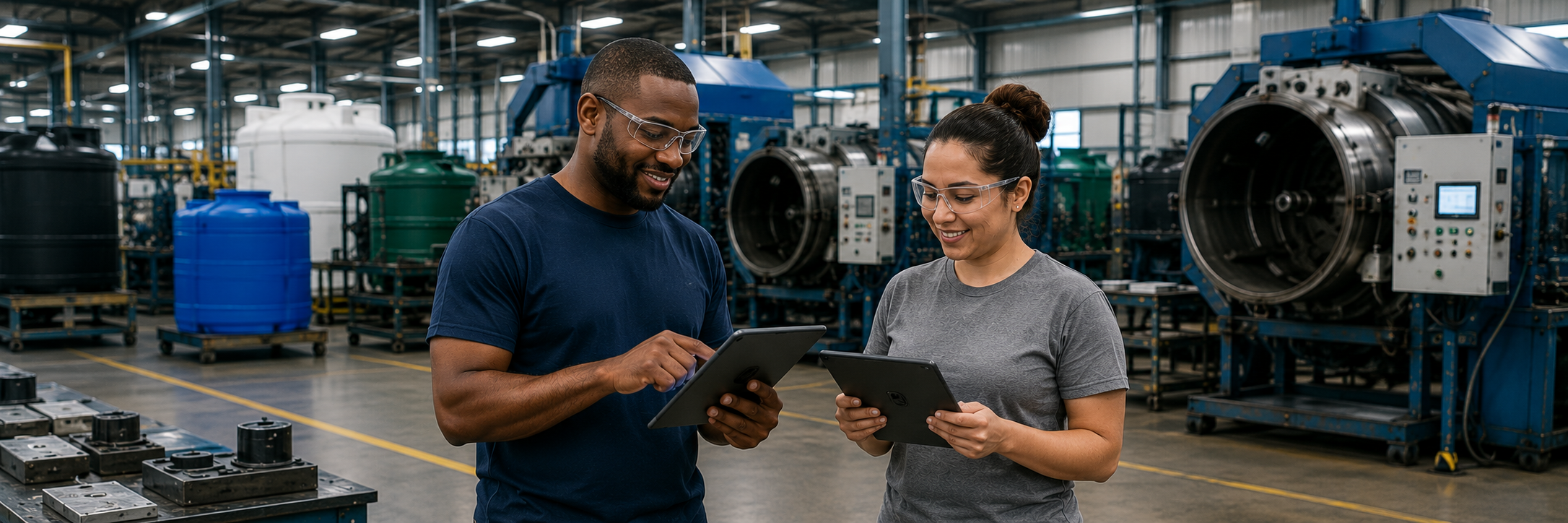
- Instead of relying on paper forms, manual logs, and disconnected spreadsheets, RotoEdge Pro digitizes production information directly at the source.
- Operators capture data at the machine.
- Supervisors gain immediate visibility into production activity.
- Management receives accurate, real-time production insights without waiting for paperwork to be collected and entered into another system.
The Bottom Line
Paper creates problems that manufacturers have accepted for far too long. The cost of paper isn’t the paper. It’s the lost visibility, delayed decisions, missed opportunities, and preventable mistakes that come with it. Manufacturers that continue to rely on clipboards, spreadsheets, and whiteboards will always be operating one step behind the plant floor.
RotoEdge Pro eliminates paper-based processes. The RotoEdge Pro software provides real-time production management visibility that’s designed specifically for rotational molding operations. RotoEdge Pro gives operations real-time information they can trust. RotoEdge Pro is installed in plants worldwide and is deployed in a week and delivers ROI in 30 days.
This allows plant managers to schedule more effectively, reduce waste, improve throughput, and increase productivity every shift, every day.
Get More Information and Schedule a Live Demonstration
See what RotoEdge Pro can do for you – Request a Demo HERE.
- Calculate revenue and productivity challenges and improvement HERE
- Or Schedule an on-site testing or benefits assessment at https://rotoedgepro.com/ or Phone at +1-360-600-9778