
Labor consistency has become just as important as labor availability.
North American manufacturers are facing a workforce challenge unlike anything seen in previous decades. Labor shortages continue to make hiring difficult, but many manufacturers are also struggling with a second, equally disruptive issue: workforce inconsistency.
Employees call out at the last minute.
Skilled operators take extended weekends.
Unexpected absences disrupt production schedules and force supervisors to spend valuable time reshuffling labor instead of focusing on quality, efficiency, and customer commitments.
The result is missed production targets, delayed shipments, increased overtime costs, and additional pressure on the employees who consistently show up and perform.
Manufacturers Must Adapt. And Deliver.
Manufacturers must adapt while still maintaining accountability, productivity, and customer commitments. Here are four ways manufacturers can improve workforce commitment, maintain production stability, and consistently meet customer expectations.
1. Establish Clear Expectations and Accountability.
Workforce consistency starts with clear expectations. Many organizations struggle because workforce policies exist on paper but are not consistently enforced. Employees quickly recognize when expectations are optional rather than mandatory. Over time, this creates a culture where call-outs become accepted behavior instead of exceptions.
Successful manufacturers clearly communicate expectations, track workforce performance, and apply policies consistently across all departments and shifts.
When accountability is visible and applied fairly, workforce consistency typically improves.
2. Build a Culture of Ownership
Ownership is not a job title. It's a commitment to helping the operation succeed. In a rotational molding operation, every employee influences production performance. A missed shift, delayed mold change, excess scrap, or an incomplete shipment affects more than a single workstation. It impacts production schedules, customer deliveries, and the ability of the entire team to meet its goals.
Manufacturers that build a culture of ownership help employees understand how their work contributes to overall plant performance.
Operators, finishers, material handlers, maintenance personnel, and supervisors all play a role in delivering quality products on time.
When employees see the connection between their actions and plant results, they become more engaged, more accountable, and more invested in team success.
3. Cross-Train Employees to Reduce Operational Risk
Even the most committed workforce will experience occasional absences. The difference is whether a single absence creates a disruption or a manageable adjustment. Organizations with a well-trained, flexible workforce are far better positioned to maintain production schedules when labor challenges arise. Cross-training does not eliminate absenteeism, but it significantly reduces its impact.
- Cross-training employees across multiple production areas helps manufacturers maintain output when staffing shortages occur.
- It also increases workforce flexibility, improves employee skill development, and reduces dependence on a small number of key operators.
4. Measure, Reward, and Reinforce High Performance with RotoEdge Pro
Companies cannot afford unpredictable production performance. Many manufacturers offer attendance bonuses, production incentives, and performance rewards. These programs often fail because employees cannot clearly see how their actions influence results.
RotoEdge Pro provides the visibility and accountability manufacturers need to build a culture of consistency, productivity, and continuous improvement. RotoEdge Pro allows organizations to recognize and reward teams that consistently meet production goals, minimize waste, improve efficiency, and deliver products on schedule.
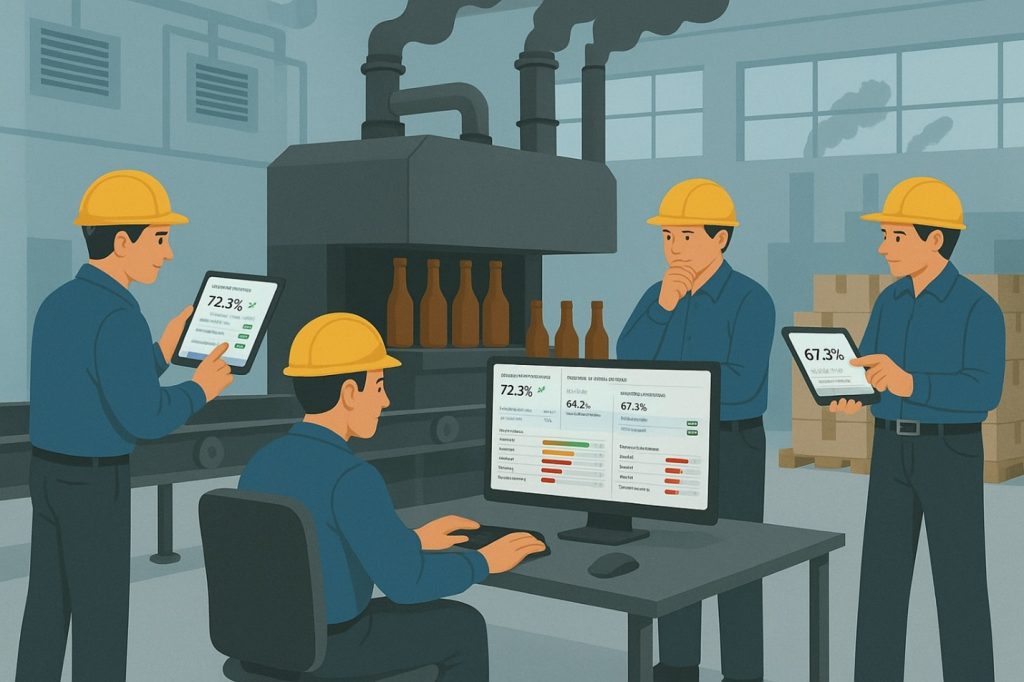
- Rotomolders gain real-time visibility into how teams are performing and where improvements can be made by tracking workforce productivity, scrap reduction, throughput, and production performance.
- When employees can see performance metrics, understand expectations, and participate in meaningful reward programs, engagement increases.
Final Analysis
Labor shortages remain a challenge, but workforce consistency is often the bigger issue. In a "call-out" economy, consistency has become a competitive advantage.
Manufacturers that establish accountability, strengthen team culture, cross-train employees, and leverage performance management tools like RotoEdge Pro are better positioned to meet customer expectations, achieve delivery goals, and protect profitability.
The labor market may continue to evolve, but the fundamentals of manufacturing remain unchanged. Customers still expect quality products, delivered on time, at a competitive price. Achieving those goals requires more than equipment and production capacity. It requires a workforce that understands its role in the success of the operation.
Manufacturers that create a culture of accountability, ownership, and performance will be better equipped to navigate workforce challenges, maintain operational stability, and support long-term growth. The result is a more accountable workforce, improved operational consistency, and stronger alignment between employee performance and business goals.
Get More Information and Schedule a Live Demonstration
See what RotoEdge Pro can do for you – Request a Demo HERE
https://rotoedgepro.com/schedule-demo/
- Calculate revenue and productivity challenges and improvement HERE. https://rotoedgepro.com/revenue-calculator/
- Or schedule an on-site testing or benefits assessment at https://rotoedgepro.com/ or phone +1-360-600-9778.