
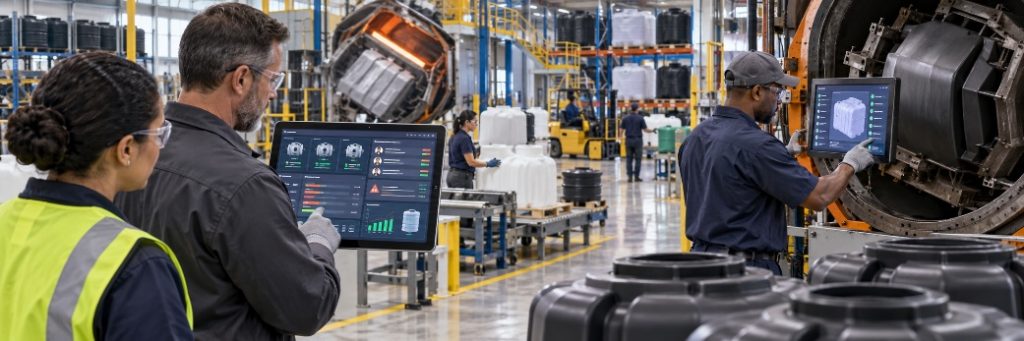
Is Your Plant Still Reporting What Happened
Instead of Acting on What’s Happening?
AI Is Moving Manufacturing from Reporting to Action
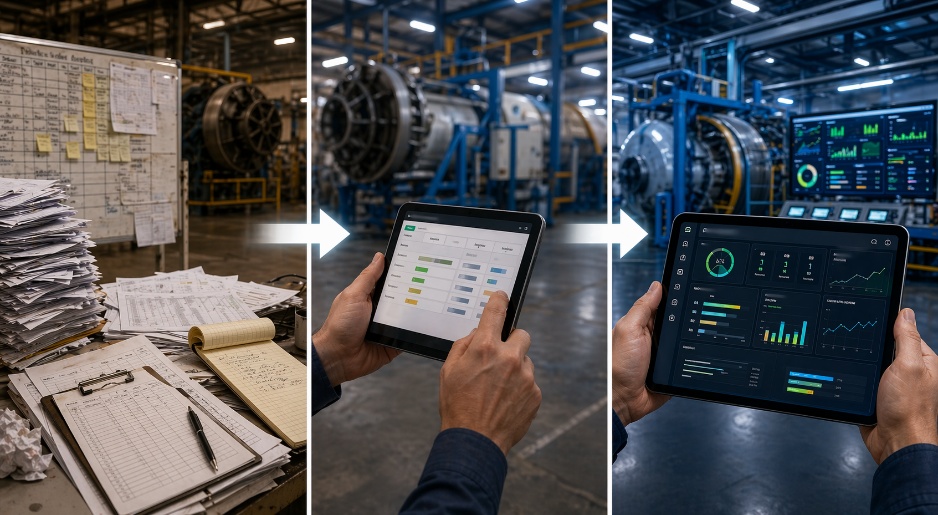
ERP systems, production reports and spreadsheets give manufacturers plenty of information about orders, inventory, labor, scrap and output. But most of that information describes what already happened.
Supervisors gain faster insight into worker productivity, output, inventory, WIP and customer orders. They can see what is happening now, respond sooner and make decisions that improve scheduling, productivity, customer delivery and revenue.
Production management becomes less about reviewing past results and more about improving performance while work is still underway.
AI answers the questions that drive every shift:
- Two employees called out. How should we reassign crews?
- What are today’s customer order priorities?
- What needs to move through finishing to ship?
- The graveyard shift had issues. How do we get production back on target?
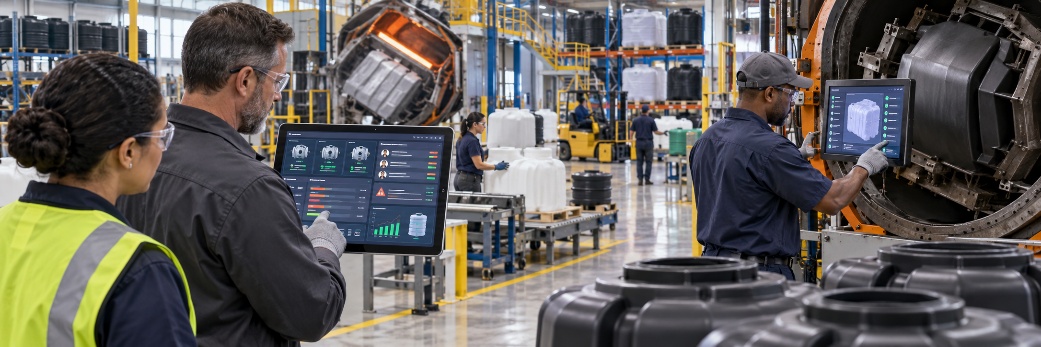
AI Delivers Better Planning
Production plans change throughout the day. Workers call out. Customer priorities shift. Machines become available. Inventory gets consumed. Scrap changes expected output. AI continuously evaluates those changes and updates production priorities around available labor, machines, materials and customer requirements.
Supervisors can see what needs to run now, what comes next and whether future capacity can meet customer commitments. AI delivers:
- Real-time machine scheduling
- Crew and labor recommendations
- Production and labor forecasting
- Customer order prioritization
- Current WIP status
- Real-time inventory levels
- Production requirements by machine and personnel
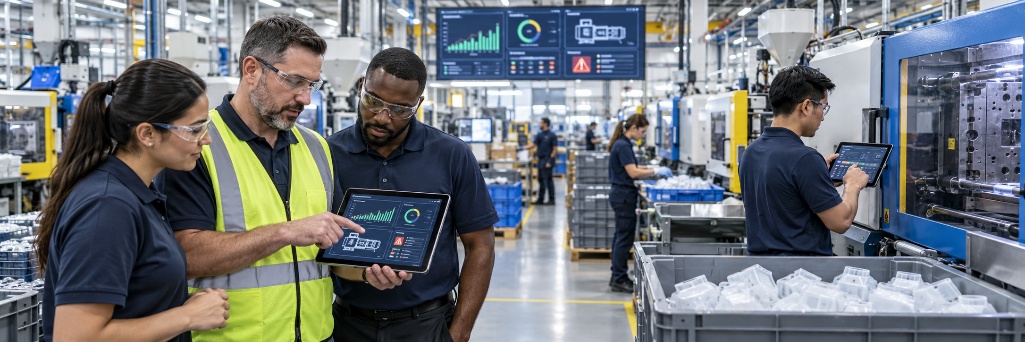
AI Helps Plants Execute Better
A production plan only works when production stays on target. AI tracks production as work happens and helps teams adjust as conditions change.
Supervisors can see output by machine and shift, worker productivity, scrap, inventory usage, WIP and customer order status. They also receive recommendations on what needs to change.
When production falls behind, AI can identify the cause and recommend the next action. Supervisors no longer have to wait until tomorrow to learn that today’s production missed its target. They can make changes during the shift and keep production moving.
AI recommends production changes such as:
- Reassigning workers
- Changing the production sequence
- Moving another mold into production
- Completing WIP that can ship now
- Adjusting schedules around available labor and equipment
- Addressing scrap before it affects more production
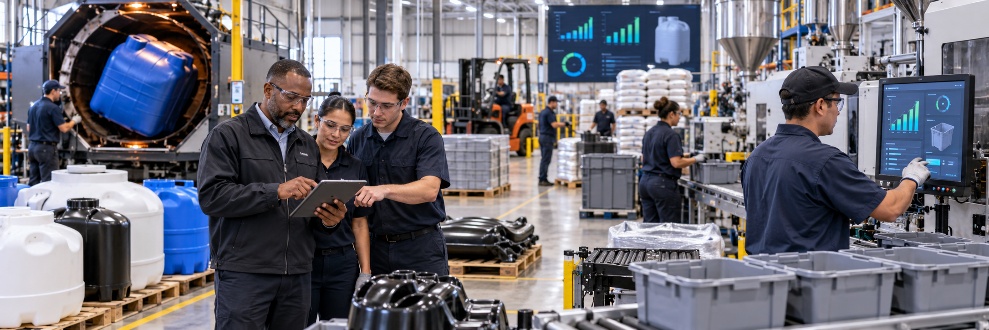
AI Recommends Adjustments That Improve Every Shift
Real-time production data creates a continuous feedback loop. AI helps manufacturers use fewer resources to produce more, keep customer orders on schedule and improve profitability.
AI measures output, worker productivity, scrap, mold activity, order completion and inventory as production happens. It analyzes those results and identifies opportunities to improve performance.
AI can also track mold usage and production history to support predictive maintenance before tooling problems interrupt production.
AI helps manufacturers:
- Fix recurring production problems
- Improve labor utilization
- Reduce scrap
- Make faster scheduling decisions
- Predict maintenance needs
The Labor Gap Doesn’t Have to Be a Knowledge Gap
Manufacturers are struggling to find, hire and retain experienced workers.
New employees often arrive with limited manufacturing knowledge but need to become productive quickly.
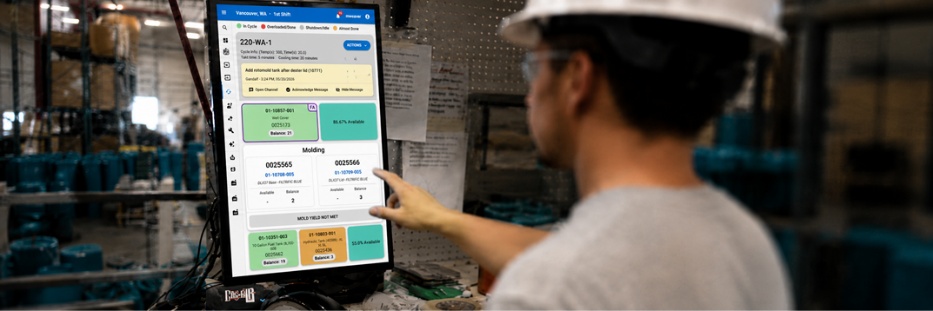
Supervisors still have to train workers, maintain quality, hit production targets and keep customer orders moving. There is little room for long training cycles, mistakes or unnecessary scrap. AI turns production issues into real-time recommendations and how-to guidance.
Workers can receive instructions and answers at the point of production. Supervisors can track worker productivity, identify where additional guidance is needed and adjust staffing as production conditions change. The result: Faster learning. Higher productivity. Fewer mistakes. Less scrap.
When production falls behind shift or daily KPIs, AI can help supervisors determine where to reassign workers and what actions can bring production back on target.
AI helps less-experienced workers:
- Understand what needs to happen next
- Learn production processes faster
- Correct problems sooner
- Reduce mistakes and scrap
- Become productive faster
AI Turns Manufacturing Data into Business Results
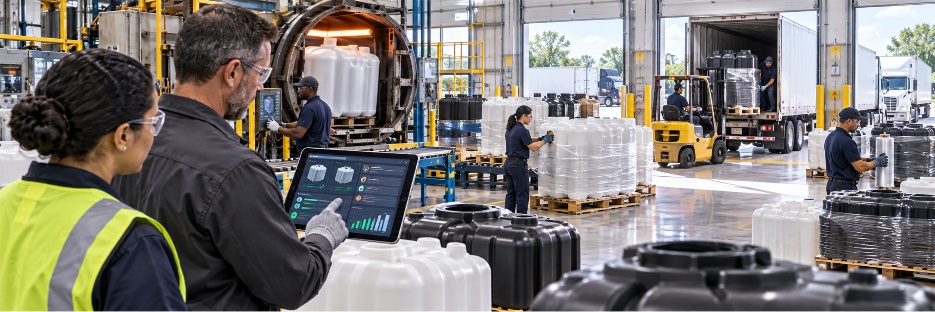
AI gives manufacturers real-time information and recommendations to improve production, labor, scheduling, inventory and customer order performance. Workers and supervisors get clear direction on what needs attention next. AI helps manufacturers:
- See the problem. Understand the cause. Know what to do next.
- Complete more customer orders on time.
- Increase productive output and reduce scrap.
- Automatically schedule labor and machines.
- Achieve shift, daily and monthly KPIs.
Get More Information and Schedule a Live Demonstration
- See what RotoEdge Pro can do for you – Request a Demo HERE
- Calculate revenue and productivity challenges and improvement HERE.
- Or Schedule an on-site testing or benefits assessment at https://rotoedgepro.com/ or Phone at +1-360-600-9778.